 Parks and Natural Attractions
Closed now
Parks and Natural Attractions
Closed now
Municipality
Povoação
Where São Miguel's settlement began, Povoação gathers the steaming Furnas valley and the warm Praia do Fogo at Ribeira Quente, among slopes and damp valleys.
About Povoação
Povoação carries one of São Miguel’s oldest settlement memories. Local tradition links its bay with Gonçalo Velho Cabral’s landing and the early occupation of the island. The place is best understood slowly, moving between the main village, agricultural slopes and roads that either fall toward the Atlantic or climb into damp valleys shaped by streams, pasture, forest and sudden viewpoints.
Furnas gives the municipality its strongest volcanic character. Steam rises from the caldeiras in the village and beside Furnas Lake, where the famous cozido is cooked for hours in the hot ground. The lake, the Chapel of Nossa Senhora das Vitórias, the environmental interpretation centre and nearby walking routes turn the valley into more than a thermal stop: it is a lived landscape of mineral waters, hot bathing and geothermal food culture.
Down on the coast, Ribeira Quente changes the mood completely. Its fishing harbour, seafront walk and dark-sand Praia do Fogo bring Povoação close to the sea. The beach sits in a bay with submarine hydrothermal springs, which make the water noticeably warmer than at many other São Miguel beaches. The coastal trail from Povoação to Ribeira Quente, via Agrião and Lomba do Cavaleiro, also recalls older working paths and island pilgrimages.
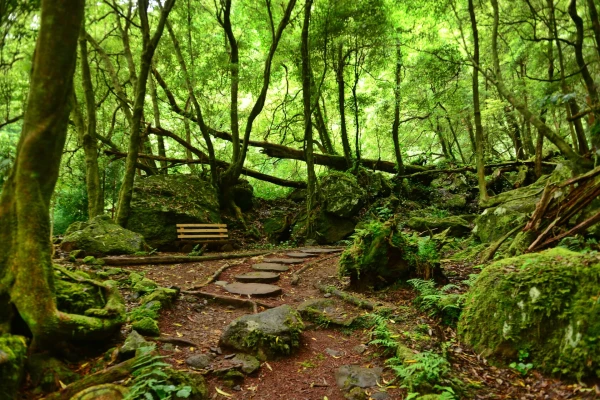
Farther east, Faial da Terra feels enclosed by mountains and softened by water. The Sanguinho route climbs through orchards, wooden bridges and dense vegetation to Salto do Prego, one of the area’s most rewarding waterfalls. Returning through the recovering village of Sanguinho adds texture to the walk, with traditional houses and the endemic plant that gave the place its name. Água Retorta adds a quieter rural edge, with Fajã do Calhau and forested picnic country.
A good visit to Povoação is built on contrasts: Furnas in the morning, cozido or fresh fish at lunch, then Ribeira Quente for the sea or Faial da Terra for a trail. After heavy rain, choose walks carefully. In clear weather, leave time for viewpoints, roadside pauses and the slower rhythm of São Miguel’s southeast.
Places in Povoação
All places
Parks and Natural Attractions
Closed now