 Parks and Natural Attractions
Closed now
Parks and Natural Attractions
Closed now
Parish
Furnas
A thermal valley on São Miguel where steam rises from the ground, with fumaroles, bubbling mud and the springs of Chã das Caldeiras, tied to the Furnas volcano.
About Furnas
Furnas is one of those places on São Miguel where the landscape seems to breathe. Green slopes, quiet streets, steam rising from the ground and warm water flowing from mineral springs give the visit a character that is hard to confuse with anywhere else in the Azores. A simple walk through the village, followed by time at the caldeiras and the lake, is enough to understand how closely everyday life here is tied to the volcano beneath it.
The ground is the main story. Furnas has fumaroles, bubbling mud, hot springs and mineral waters connected to the active hydrothermal system of the Furnas Volcano, part of the Azores UNESCO Global Geopark setting. For visitors, that means sulphur in the air, steam vents, hot soil and a landscape that asks for respect. Barriers and warning signs should be taken seriously, because the geothermal activity is not staged for tourism; it is the living geology of the valley.
In the centre of Furnas, Chã das Caldeiras is a strong first encounter with that volcanic world. Among mineral-water spouts, steaming pools and warm springs with different tastes and temperatures, the place feels both raw and carefully lived with. The Microbial Observatory of the Azores adds a scientific layer to the visit, explaining how microorganisms thrive in these extreme thermal environments and why the coloured films around some springs are part of a delicate ecosystem.
Furnas Lake slows everything down. The PRC06SMI walking route links the village with the lake, passing places such as Sant'Ana Church, Poça da Dona Beija, rural lanes and shaded lakeside paths before reaching the Caldeiras da Lagoa. This is where the famous Cozido das Furnas is cooked underground, with sealed pots left for hours in the volcanic heat. If tasting it is part of the plan, booking a local restaurant in advance is the most practical way to enjoy it properly.
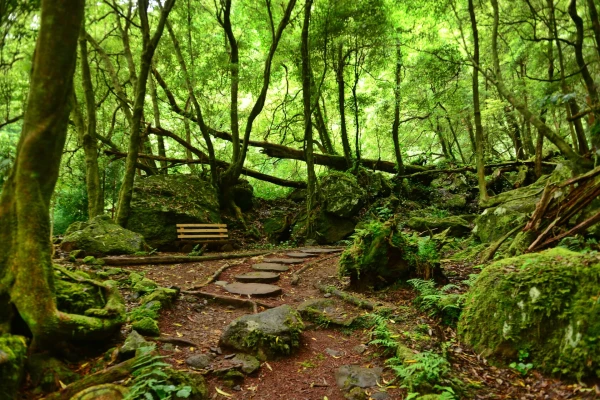
Around the lake, natural and built heritage sit very close together. The Chapel of Nossa Senhora das Vitórias, reflected in the water, brings a surprising neo-Gothic silhouette to the volcanic setting. Nearby, Mata-Jardim José do Canto preserves a 19th-century botanical vision, with camellias, mature trees, shaded paths and a waterfall within the estate. It is the kind of garden that rewards a slower visit, especially for travellers who enjoy places with history as much as scenery.
The Furnas Environmental Interpretation Centre, on the lakeshore, helps make sense of what the eye is seeing. Its exhibits cover the volcano, biodiversity, the lake basin and the recovery work carried out in the protected landscape. Outside, the lake margins are also a good place for birdwatching and for noticing how ecological restoration has changed parts of the valley. Furnas is memorable for steam and hot water, but its quieter story is also one of patient environmental repair.
The thermal bathing spaces are another essential part of the Furnas experience. Parque Terra Nostra combines one of the Azores' most distinctive gardens with a warm iron-rich thermal pool, surrounded by dense planting that changes with the seasons. Poça da Dona Beija offers a more intimate bathing experience, with thermal pools set into a lush, humid corner of the village. Both places are popular, so checking tickets, rules and opening times before arriving is sensible.
For the broadest view, Pico do Ferro is the classic lookout: when the weather clears, the lake, the village, the fumaroles and the green slopes all come into one frame. Walkers can look at the PRC22SMI route, with proper footwear and care on wet ground. Back in the village, bolos lêvedos, taro queijadas and Cozido das Furnas bring the volcanic landscape to the table. Local life also appears in camellia shows, food festivals and religious celebrations, revealing a Furnas that is more than its postcard views.
Places in Furnas
All places
Parks and Natural Attractions
Closed now