São Jorge · October 5
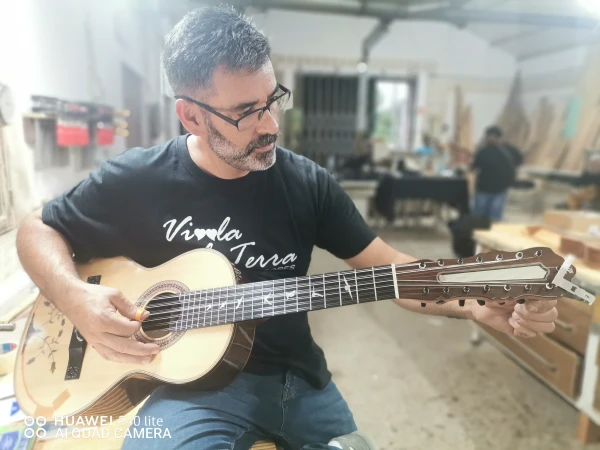
Raimundo Leonardes marks Viola da Terra Day with practical session and new website
Raimundo Leonardes marked Viola da Terra Day on São Jorge with a session on stringing, tuning and maintenance…
In Calheta de São Jorge, sea, PDO cheese and fajãs set the pace, from the Francisco de Lacerda Museum to the trail down to Santo Cristo and the Cubres.
Calheta de São Jorge is best approached slowly. In Calheta town, the harbor, fishing boats, bathing area and Francisco de Lacerda Museum set the tone: the museum occupies the former Marie d'Anjou tuna cannery and links local memory with music, daily work and the island's canning past. It is a useful first stop before heading into the valleys and fajãs.
Inland, roads climb through damp pasture and stone walls, where dairy life explains the weight of São Jorge PDO cheese. Its clean, slightly spicy flavor belongs to this landscape of cattle fields, mist and basalt. Try it in a cafe or small shop with bread, fish or simple sweets; Calheta's food appeal is practical and local rather than staged.
The north coast gives the area its signature scenery. The PR01 SJO trail drops from Serra do Topo to Fajã da Caldeira de Santo Cristo and continues to Fajã dos Cubres, passing pastures, streams, native plants and cliff views. Santo Cristo is reached on foot and is known for its lagoon, clams and surf. Cubres is easier to reach and feels quieter, with its lagoon, church, low houses and pebble barrier facing the Atlantic.
On the south coast, Fajã dos Vimes has a different mood: warmer, sheltered and domestic. Coffee grows here, and high-stitch quilts are still woven on traditional looms. Between a coffee tasting, a craft visit and views across to Pico and Faial, the fajã feels less like a lookout and more like a lived-in pocket of cultivation and skill.
At the eastern end, Topo adds a historic edge, with Casa dos Tiagos, its harbor and wide views toward the islet and open sea. Calheta works as a coherent journey because those pieces stay connected: port town, rural plateau, remote north-coast fajãs, handmade craft and cheese. Plan with a car, allow time for walking, check trail conditions, and leave room for unplanned pauses.